
RCD Protection and RCBOs Explained
What is the difference between an RCD and an RCBO?
RCDs and RCBOs are important electrical safety devices designed to reduce the risk of electric shock and electrical fires.
However, they do not all protect circuits in the same way.
Many older consumer units use one or two RCDs to protect several circuits. Modern consumer units are often fitted with individual RCBOs, allowing each circuit to have its own separate protection.
This guide explains what RCD protection does, how an RCBO works and why individual RCBO protection can reduce disruption when an electrical fault occurs.
Easy Spark Ltd provides electrical inspection, testing and consumer unit upgrades throughout Grays, Thurrock, Essex, Kent and surrounding areas.
What is an RCD?
RCD stands for Residual Current Device.
An RCD continually monitors the electrical current flowing through a circuit. Under normal conditions, the current flowing out through the live conductor should return through the neutral conductor.
If some of that current takes an unintended route—possibly through damaged wiring, faulty equipment or a person—the RCD detects the imbalance and disconnects the supply quickly.
RCD protection can substantially reduce the risk of serious electric shock. It may also disconnect the supply when certain electrical faults cause current to leak to earth.
However, an RCD does not replace the need for correct earthing, bonding, circuit protection and properly installed wiring.
Where is RCD protection commonly required?
Depending on the installation and the current wiring regulations, RCD protection may be required for:
Socket-outlets
Cables concealed within walls
Circuits supplying bathrooms and shower rooms
Outdoor electrical equipment
Lighting circuits in domestic properties
Electrical equipment that may be used outdoors
New circuits and alterations to existing circuits
EV charger installations
Certain supplies to outbuildings and garden equipment
The requirements depend on the type of circuit, its intended use, the cable installation method and the protective measures already in place.
When Easy Spark Ltd carries out electrical installations and alterations, we assess the existing circuit and consumer unit to establish whether the proposed work has suitable protection.
What is an RCBO?
RCBO stands for Residual Current Breaker with Overcurrent Protection.
An RCBO combines two forms of protection in one device:
Residual-current protection, which monitors current leaking to earth
Overcurrent protection, which protects the circuit against overloads and short circuits
In straightforward terms, an RCBO performs the functions normally provided by an RCD and an MCB, but it protects an individual circuit.
A modern consumer unit might therefore have a separate RCBO for each lighting, socket, cooker, shower and outdoor circuit.
RCD vs RCBO: what is the difference?
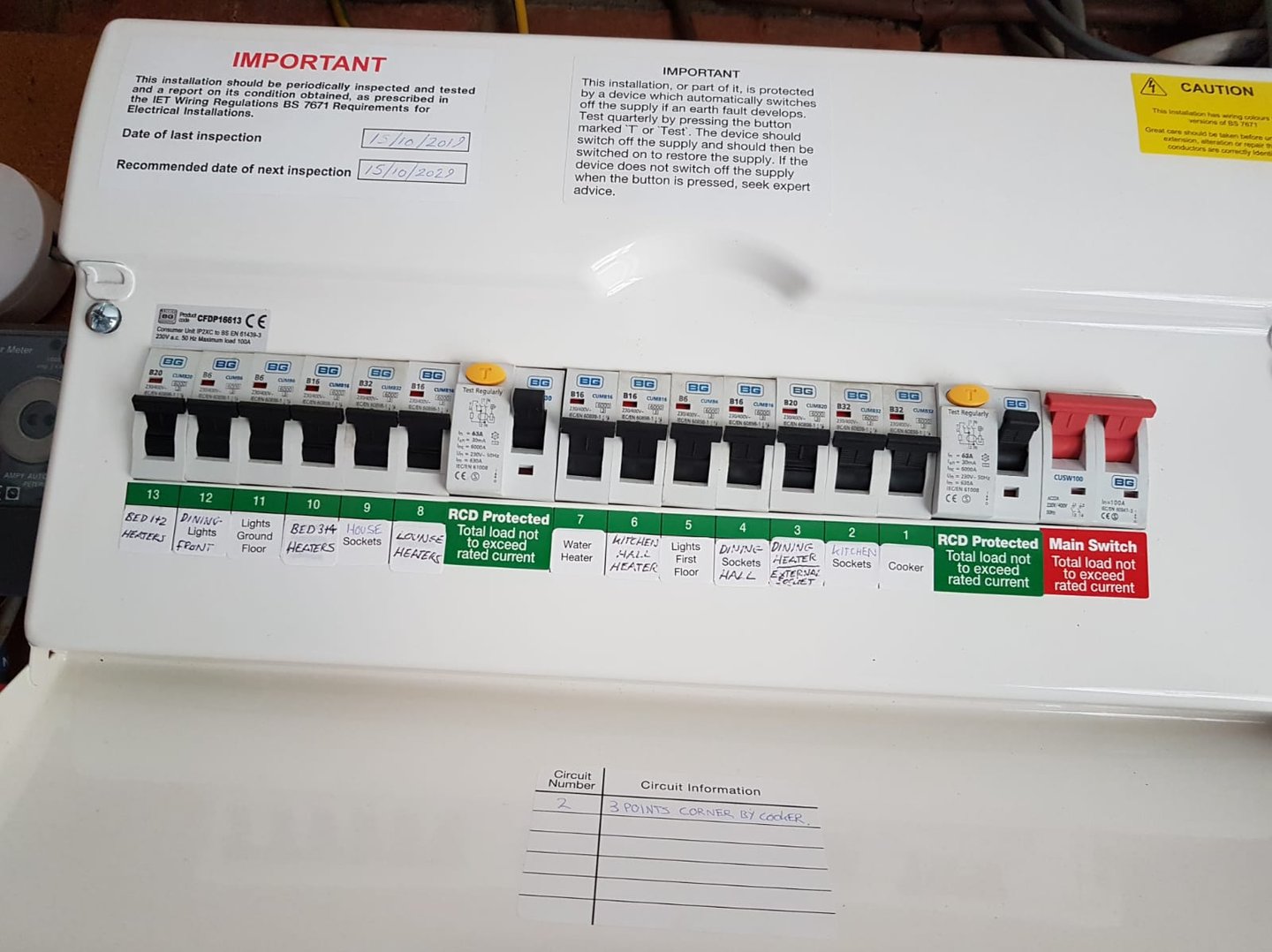
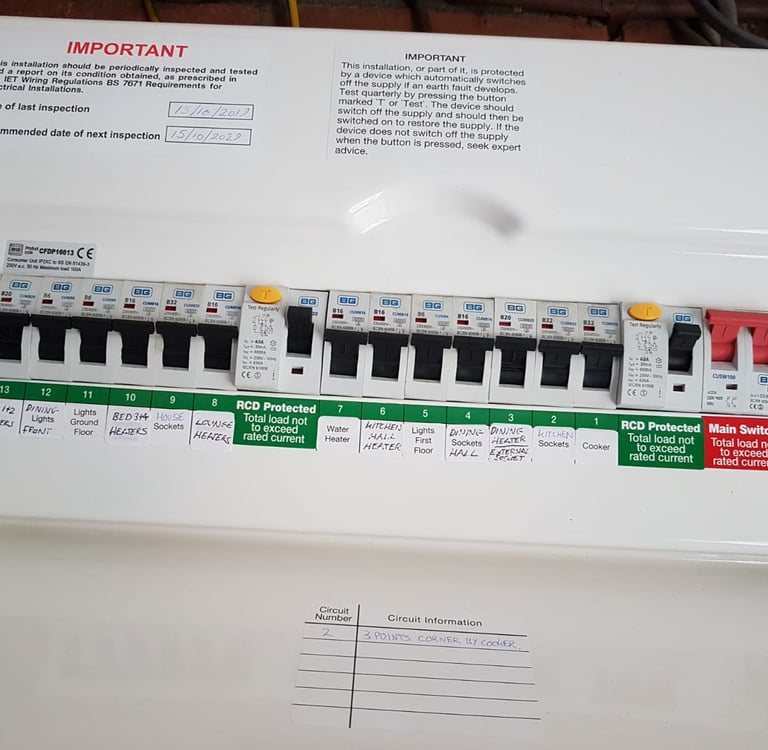
In a traditional split-load consumer unit, one RCD may protect several circuits.
For example, the same RCD could protect:
Kitchen sockets
Upstairs lighting
The shower
An outdoor socket
The boiler
If one of these circuits develops an earth-leakage fault, the shared RCD may disconnect all the circuits it protects. This can leave several parts of the property without power while the faulty circuit is identified.
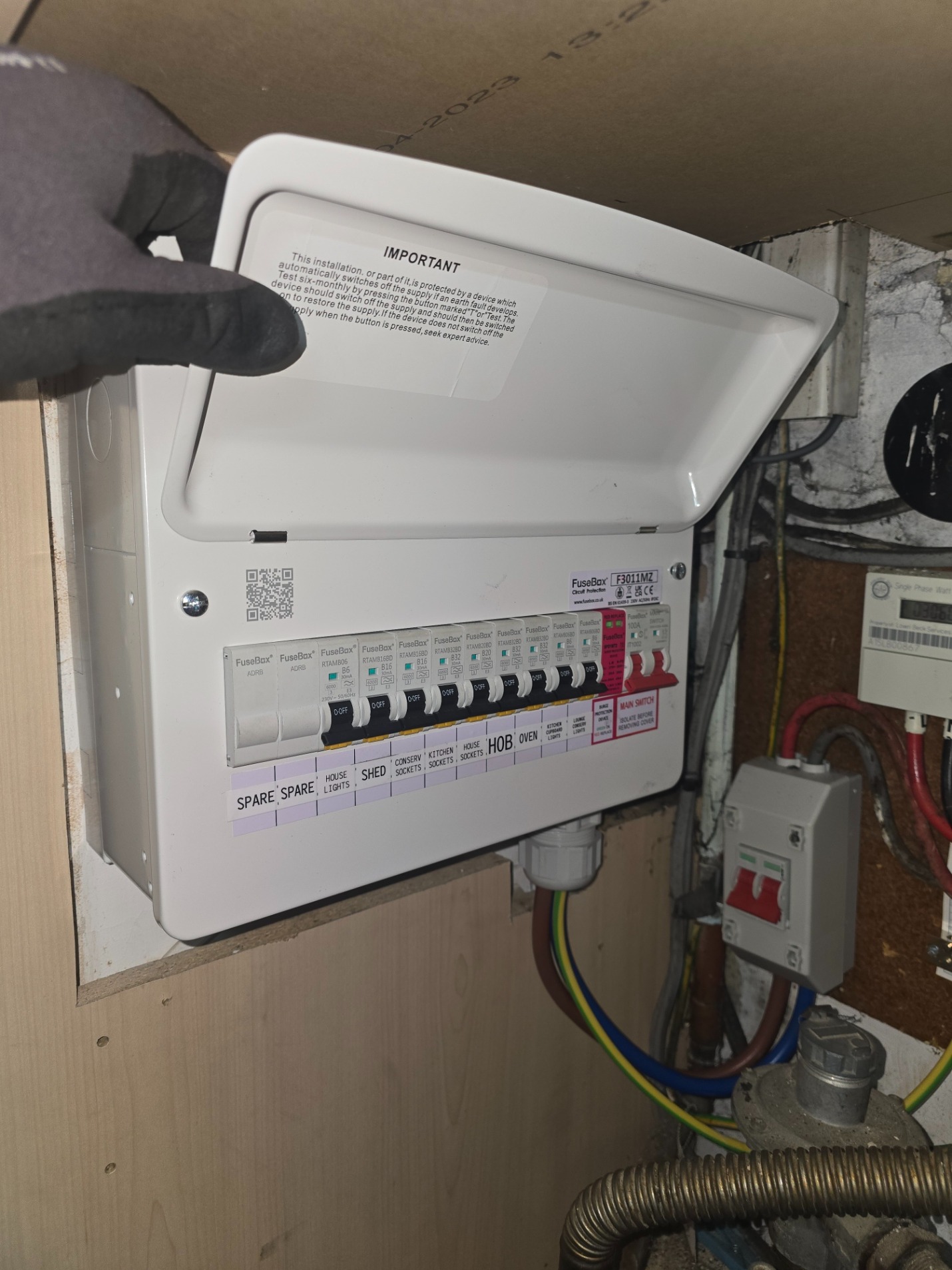
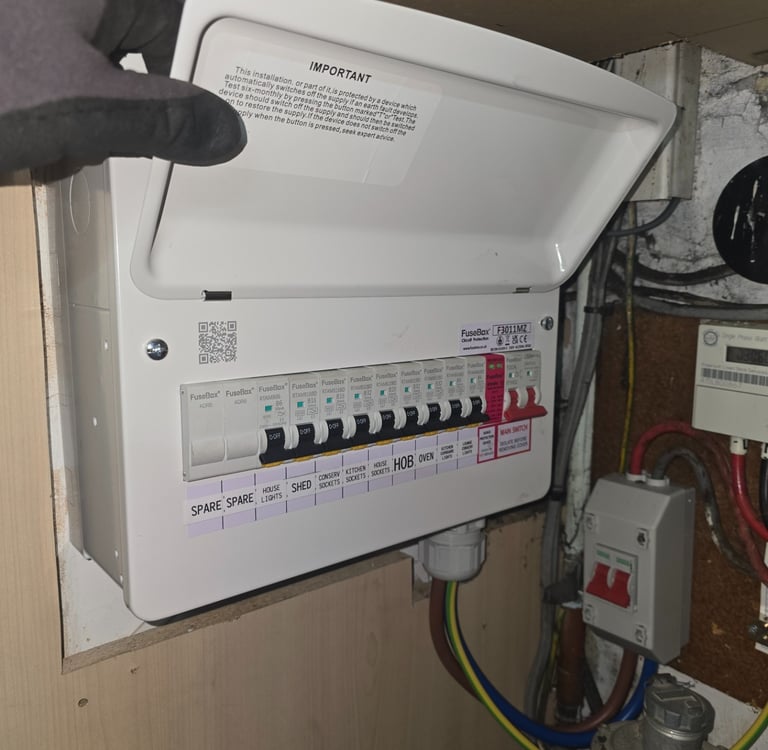
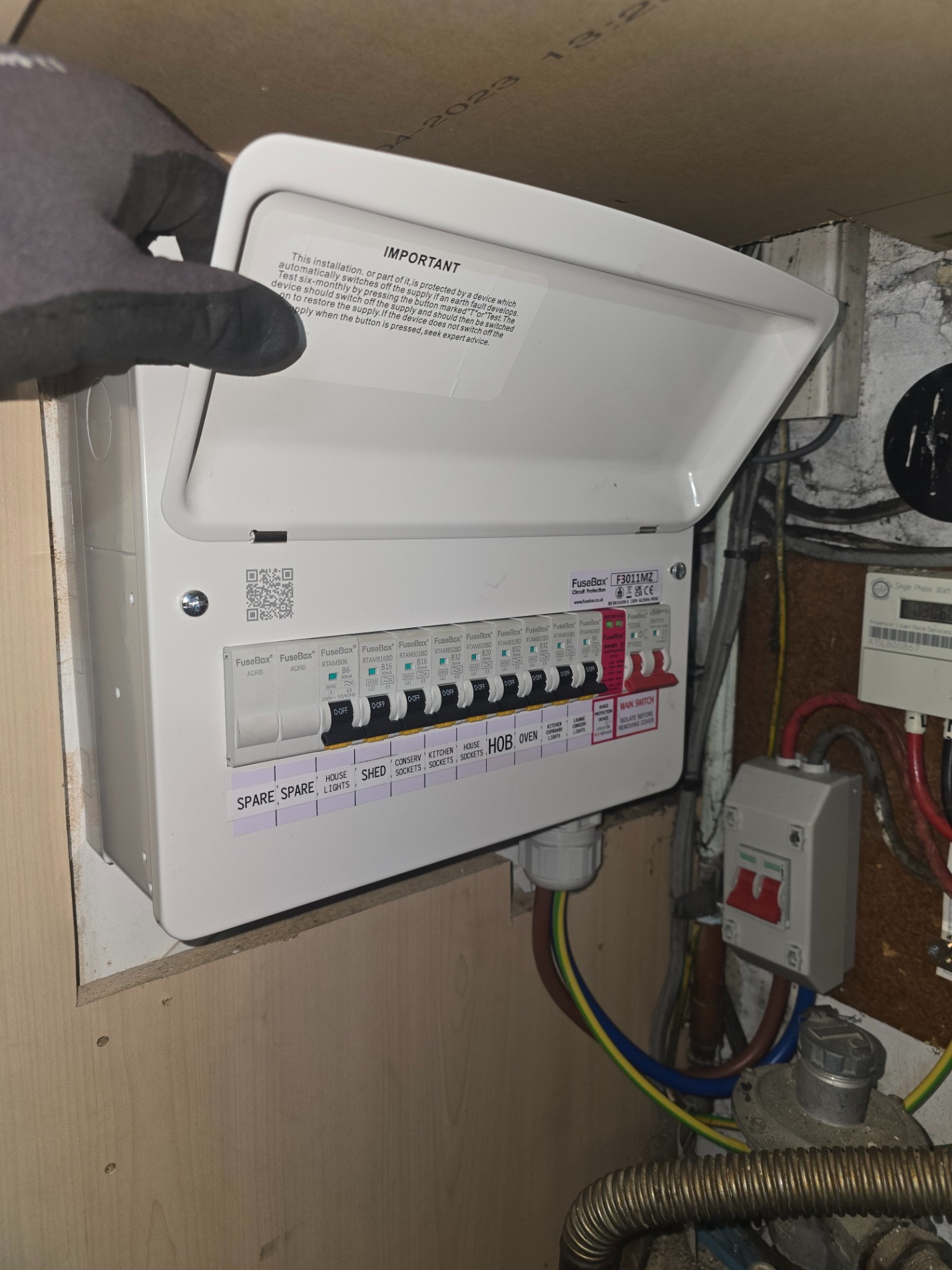
With an RCBO consumer unit, each circuit is protected individually. A fault affecting one circuit should normally disconnect that circuit without unnecessarily switching off the other healthy circuits.
Shared RCD arrangement
One RCD protects several circuits
A single fault may disconnect several circuits
Fault finding may take longer
Combined leakage from several circuits can affect
one RCD
Less convenient when a fault occurs
Individual RCBO arrangement
Each circuit has its own RCBO
A fault is normally limited to the affected circuit
The affected circuit is easier to identify
Leakage is monitored separately on each circuit
Reduced disruption elsewhere in the property
Why do we recommend individual RCBO protection?
Reduced disruption
If an outside socket or appliance develops a fault, an RCBO should disconnect the affected circuit without unnecessarily switching off unrelated circuits.
This can help keep your lighting, refrigerator, boiler, internet and other essential equipment operating.
Easier fault finding
The RCBO that has operated immediately identifies which circuit requires investigation. This can make it easier and quicker for an electrician to locate the problem.
No shared accumulation of leakage
Modern appliances and electronic equipment can produce small amounts of normal protective-conductor current.
Where several circuits share one RCD, these currents can combine and contribute to unwanted tripping. Individual RCBOs separate the circuits and reduce the accumulation of leakage on a single shared device.
Individual protection for every circuit
Each circuit has its own residual-current and overcurrent protection. This provides a better division of the installation and reduces the number of circuits affected by a single fault.
Improved convenience and safety
Separating circuits can prevent one fault from unnecessarily removing power from other parts of the home. This is particularly helpful where the property contains freezers, boilers, alarms, internet equipment or outdoor circuits.
Why do modern installations use Type A protection?
Older consumer units are often fitted with Type AC RCDs. These were principally designed to respond to alternating residual currents.
Modern homes contain increasing numbers of electronic devices, including:
Washing machines
Induction hobs
LED drivers
Computers and televisions
Smart-home equipment
EV chargers
Battery and solar equipment
Variable-speed heating and cooling systems
Many of these products contain electronic controls that can create residual currents with a pulsating DC component.
Type A RCDs and RCBOs are designed to detect both alternating residual current and pulsating DC residual current. This generally makes Type A protection more appropriate for many modern domestic circuits.
The correct device must still be selected according to the circuit, connected equipment and manufacturer’s instructions.
Does an older consumer unit have to be replaced?
Not necessarily.
An older consumer unit is not automatically unsafe simply because a newer design is available. Its condition, construction, protective devices and the installation it supplies must all be assessed.
A consumer unit upgrade may be recommended when:
Circuits have no suitable RCD protection
The enclosure or internal components are damaged
There are signs of overheating
Protective devices are unsuitable
Additional circuits cannot be accommodated safely
Circuits trip frequently
Circuit identification is poor
An EICR identifies safety concerns
Major alterations or new equipment are being installed
An Electrical Installation Condition Report can assess the condition of the consumer unit, wiring, earthing, bonding and protective devices before deciding whether an upgrade is necessary.
Can an RCD prevent every electric shock?
No electrical safety device can remove every risk.
An RCD is an important additional protective measure, but it does not make unsafe wiring or damaged equipment safe. It must be used alongside:
Effective earthing and bonding
Correctly selected protective devices
Suitable wiring and accessories
Proper electrical testing
Regular inspection and maintenance
Safe use of electrical equipment
Never deliberately touch a live conductor or rely on an RCD as your only protection against electric shock.
Why does an RCD or RCBO keep tripping?
A device that repeatedly trips may be responding to a genuine fault.
Possible causes include:
A faulty appliance
Damaged wiring
Water entering an outdoor accessory
Moisture inside equipment
A neutral-to-earth fault
Insulation damage
Excessive combined leakage
A damaged or defective protective device
Repeatedly resetting the device without investigating the cause is not recommended. If it will not remain on, unplug accessible appliances and contact a qualified electrician.
Our fault finding and electrical testing work includes investigating tripping RCDs, RCBOs and circuit breakers.
How should I test an RCD or RCBO?
Most RCDs and RCBOs have a button marked T or Test.
Pressing this button simulates a fault and the device should switch off. Follow the testing frequency shown on the consumer unit or the manufacturer’s label.
Testing the button confirms that the mechanical tripping function operates, but it does not replace electrical testing with calibrated instruments.
If the device does not trip when the test button is pressed, arrange for it to be inspected by a qualified electrician.
Frequently asked questions
Are RCBOs better than RCDs?
RCBOs do not make faults harmless, but individual RCBO protection usually provides better circuit separation. If one circuit develops a fault, fewer healthy circuits should be affected.
Does every circuit need an RCBO?
Not every existing installation will necessarily require one. The correct protection depends on the installation, circuit design, connected equipment and applicable wiring regulations. Individual RCBOs are now widely used in modern domestic consumer units.
Can you replace an RCD without changing the consumer unit?
Sometimes. It depends on the consumer unit’s manufacturer, model, condition and the continued availability of suitable compatible components. Devices from different manufacturers or product ranges must not be mixed unless their suitability has been specifically confirmed.
Will an RCBO stop nuisance tripping?
Individual RCBOs can prevent a fault or accumulated leakage on one circuit from disconnecting several other circuits. However, unexplained tripping still needs to be investigated rather than dismissed as a nuisance.
What does the test button do?
The test button creates an internal imbalance that should cause the RCD or RCBO to trip. It checks the device’s basic operating mechanism but does not provide the full test carried out by an electrician.
Do I need RCD protection for a new socket?
Appropriate additional protection is normally required for new domestic socket-outlets. The existing circuit and consumer unit should be assessed before the socket is installed.
Does a new consumer unit include RCBOs?
Easy Spark Ltd can install modern metal consumer units with individual Type A RCBO protection and a Surge Protection Device, subject to the requirements of the installation.
Does your home have suitable RCD protection?
If you are unsure whether your consumer unit provides suitable protection, Easy Spark Ltd can inspect and test your electrical installation.
We provide:
Consumer unit inspections and upgrades
RCD and RCBO testing
Electrical fault finding
EICRs
New circuits and electrical alterations
Electrical safety advice
Easy Spark Ltd is a NAPIT-registered electrician and Which? Trusted Trader covering Grays, Thurrock, Dartford, Gravesend, Essex, Kent and surrounding areas.
Send a photograph of your consumer unit and your postcode by WhatsApp for initial advice or to request a quotation.
Get a Quote
Contact Easy Spark Ltd
Local electrical services across Grays, Thurrock, Essex and Kent.
Phone
© 2026 Easy Spark Limited